



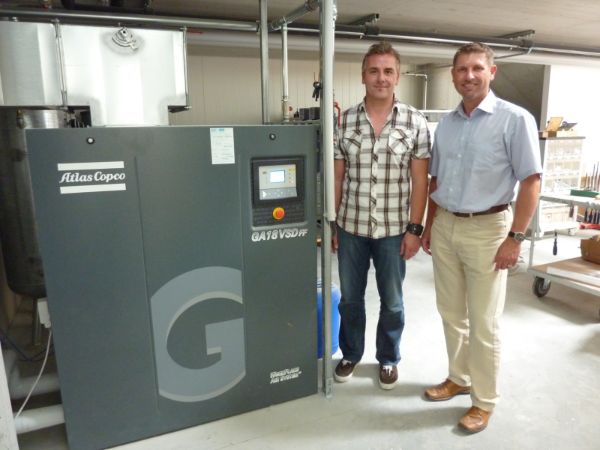
Have you ever wondered why your compressor feels like it is always running but never really delivering the performance you expect? Or why does downtime show up exactly when production is at its peak? If you manage operations, maintenance, or energy costs, compressor efficiency is not just a technical concept. It directly affects your power bills, equipment life, and overall productivity.
Many industries assume that poor performance means they need new equipment. In reality, understanding compressor efficiency, including concepts like isentropic efficiency of the compressor and volumetric efficiency, often unlocks major improvements without replacement.
The good news is that improving compressor efficiency and availability usually starts with smarter operation, better monitoring, and the right service support.
Why Compressor Efficiency and Availability Matter So Much
Compressed air is often called the fourth utility in industrial plants. It supports manufacturing, food and beverage processing, automotive production lines, and more. When compressors are inefficient, energy is wasted. When availability drops, production slows or stops.
Compressor efficiency means delivering the required airflow using the least possible energy. Availability means the compressor is ready when needed, without unplanned shutdowns.
Together, high compressor efficiency and availability help reduce operating costs, protect equipment, and keep operations running smoothly.
Understanding Compressor Efficiency in Simple Terms
Before improving performance, it helps to understand what compressor efficiency really means.
One key measure is the isentropic efficiency of the compressor. This compares the ideal compression process to what actually happens in real operating conditions. In simple words, it shows how close your compressor is to perfect performance.
Another important concept is the volumetric efficiency of a compressor. This measures how much air actually enters the compressor compared to its theoretical capacity. Leaks, heat, and poor intake conditions reduce volumetric efficiency.
Many engineers also refer to the compressor efficiency formula to evaluate performance. While formulas exist, the practical takeaway is simple. Higher efficiency means less energy is wasted as heat, friction, or pressure loss.
Monitoring compressor isentropic efficiency over time helps identify wear, fouling, or control issues early.
Start by Understanding Your Compressor Type
One commonly overlooked factor in compressor efficiency is whether the right compressor type is being used.
This is where discussions around axial vs centrifugal compressor selection become important.
An axial compressor moves air parallel to the shaft and handles very high airflow rates. It is often used in large-scale applications with steady operating conditions.
A centrifugal compressor increases air velocity using an impeller and converts that velocity into pressure. It is widely used in industrial environments because of its reliability and stable efficiency.
When comparing centrifugal vs axial compressor options, the decision depends on airflow demand, pressure levels, space, and operating stability.
In most industrial plants, the axial compressor vs centrifugal compressor comparison favors centrifugal systems because they offer better efficiency control, easier maintenance, and stable performance across varying loads.
Understanding axial flow compressor vs centrifugal compressor differences helps ensure your equipment operates within its most efficient range.
Match the Compressor to the Real Demand
One of the biggest efficiency killers is the mismatch between air demand and compressor capacity.
An oversized compressor cycles frequently, lowering volumetric efficiency and increasing wear. An undersized compressor runs continuously, reducing isentropic compressor efficiency and increasing failure risk.
Reviewing real air demand during peak and off-peak hours helps determine whether your compressor operates efficiently or struggles unnecessarily.
This step is critical when planning upgrades or evaluating axial compressor vs centrifugal compressor options for future expansion.
Keep Intake Air Clean and Cool
Clean, cool air directly improves the volumetric efficiency of the compressor.
Dust, oil mist, and high intake temperatures reduce the amount of usable air entering the system. This forces the compressor to work harder to meet demand.
Regular filter replacement and proper intake positioning can significantly improve compressor efficiency without changing any equipment.
Cooler intake air is denser, which means more air per cycle and less energy consumption.
Maintain Optimal Operating Pressure
Running at higher pressure than needed reduces compressor efficiency fast.
Each increase in pressure increases energy use and reduces the isentropic efficiency of the compressor. Many plants operate at pressures far above actual process requirements.
Reducing system pressure even slightly often results in immediate energy savings and improved compressor availability.
This applies whether you operate a centrifugal compressor or evaluate centrifugal vs axial compressor systems for future planning.
Reduce Leaks Across the System
Air leaks directly reduce the volumetric efficiency of the compressor.
Leaks force compressors to run longer to maintain pressure, increasing power consumption and wear. Regular leak audits and fast repairs are among the quickest ways to improve compressor efficiency.
Fixing leaks also stabilizes pressure, which improves overall system availability.
Use Smart Monitoring and Controls
Modern compressors use intelligent controls to track pressure, temperature, flow, and energy use.
These systems help monitor compressor isentropic efficiency trends and detect performance drops early. Predictive alerts allow maintenance teams to act before breakdowns occur.
Smart monitoring is especially valuable for centrifugal compressor systems that rely on stable operating conditions for peak efficiency.
Follow a Proactive Maintenance Approach
Reactive maintenance always costs more.
A structured maintenance plan helps maintain compressor efficiency by keeping internal components clean, aligned, and properly lubricated.
Professional service ensures efficiency losses caused by fouling, misalignment, or worn parts are corrected early. This directly improves compressor availability and extends equipment life.
Use Original Parts and Expert Service
Using original components protects compressor efficiency over time.
When comparing axial compressor vs centrifugal compressor performance, proper servicing often has a bigger impact than the equipment design itself.
Authorized service providers understand manufacturer standards and efficiency tolerances, reducing repeat failures and energy losses.
Learn From Trusted Industry Resources
Reliable information matters when making efficiency decisions.
Atlas Copco provides clear insights into axial compressor vs centrifugal compressor differences and how each design impacts performance and efficiency. Learning from trusted manufacturers helps avoid costly mistakes and unrealistic expectations.
Think Long Term, Not Short Term Savings
True efficiency improvement focuses on lifecycle cost, not just upfront pricing.
A slightly higher investment in proper maintenance, controls, and system optimization often delivers long term gains in compressor efficiency, availability, and reliability.
This is especially true when evaluating centrifugal vs axial compressor options for industrial applications.
How Air Comppower Supports Better Efficiency and Availability
Air CompPower is a trusted authorized distributor of Atlas Copco industrial air compressors, air dryers, vacuum pumps, blowers, and industrial products in Canada. With over fifteen years of experience, we deliver high-quality and energy-efficient solutions for industries such as manufacturing, food and beverage, and automotive.
As one of the leading industrial air compressor manufacturers and air compressor suppliers, we provide air compressors for sale along with expert air compressor service and repair. Our tailored air compressor maintenance solutions help improve compressor efficiency, reduce downtime, and protect long-term performance.
Based in Toronto, we support businesses across Canada with technical expertise, sustainability-focused solutions, and reliable service.
Conclusion
Improving compressor efficiency and availability is rarely about replacing equipment. It is about understanding efficiency metrics like the isentropic efficiency of a compressor, improving volumetric efficiency, maintaining the system properly, and working with the right partner.
If you operate in Toronto or anywhere in Canada and want to improve compressor efficiency, reduce energy costs, and increase uptime, Air CompPower is ready to support you.
Reach out to our team to assess your compressor system and discover how smarter operation and expert service can make a measurable difference.
FAQs
What is compressor efficiency?
Compressor efficiency measures how effectively a compressor converts electrical power into usable compressed air.
What is the isentropic efficiency of a compressor?
Isentropic efficiency compares ideal compression to real performance and shows how much energy is lost during compression.
What is the volumetric efficiency of a compressor?
Volumetric efficiency measures how much air actually enters the compressor compared to its theoretical capacity.
How can I improve compressor efficiency quickly?
Fix air leaks, reduce operating pressure, clean intake air, and follow regular maintenance.
Does professional air compressor service improve efficiency?
Yes, expert service helps maintain isentropic efficiency, reduce losses, and prevent unplanned downtime.